



SMART PROTOTYPES SUMMIT 2026

BEYOND ZERO: WELCOME TO THE SMART ERA

May 19-22, 2026
VI-grade SimCenter, Udine, Italy

Event Starts In

40

Days

11

Hours

43

Minutes

2

Seconds

Discover the 2026 Smart Prototypes Summit

The Smart Prototypes Summit is a three-day international event hosted by HBK and VI-grade, dedicated to innovation in vehicle development. Held May 19 – 22, 2026 at the VI-grade SimCenter in Udine, Italy, it builds on the legacy of the Zero Prototypes Summit and brings together engineers, OEMs, suppliers, research institutes, and industry leaders to showcase how “smart” prototypes integrate virtual and physical testing, simulation, measurement tools, and data to speed up the development of smarter, more sustainable, high-performance vehicles.

The event features technical presentations, live demos of advanced technologies – such as driving simulators and virtual engineering platforms – interactive training sessions, user meetings, and exclusive networking with HBK and VI-grade automotive experts and innovators.


Tech Summit
May 19-22, 2026

Global Networking

Meet peers, partners, and industry leaders shaping the future of mobility

Engineering Mobility, Live

Expert talks, demos, and hands-on training

Sarah Johnson

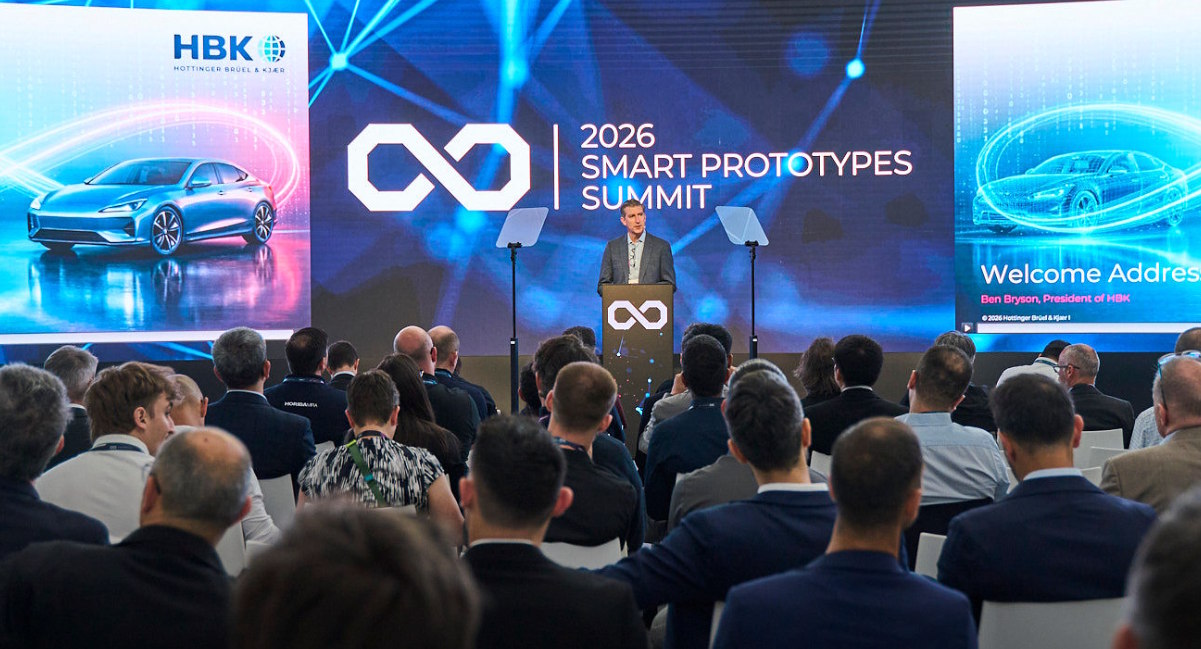
"Our job is to bring virtual and physical together, to really create a closed-loop innovation environment."

Ben Bryson HBK PRESIDENT

About the Smart Prototypes Summit 2026

The Smart Prototypes Summit brings together engineers, researchers, and industry leaders to explore the latest innovations in vehicle development. From virtual validation and driving simulators to advanced testing solutions, the summit offers hands-on demos, technical sessions, and interactive workshops designed to inspire collaboration and accelerate innovation in mobility. Join peers and experts from around the world to exchange knowledge, experience cutting-edge technology, and shape the future of automotive development.

The Smart Prototypes Summit 2026 offers an AI-POWERED HELP DESK for quick access to logistics, agenda updates, registration info, and FAQs, helping you navigate SPS2026 efficiently.

35+

TECHNICAL PRESENTATIONS & KEYNOTES

20+

LIVE DEMO EXPERIENCES

6

TECHNOLOGY TRACKS

1

UNIQUE SMART TESTING ECOSYSTEM

Who Should Attend?

For professionals shaping the future of vehicle development and testing.

Automotive Engineers

Design, testing, and development professionals

NVH & Dynamics Experts

Ride, noise, vibration, and vehicle dynamics specialists

ADAS & HMI Professionals

Advanced driver assistance and human–machine interface teams

Powertrain & EV Engineers

Electric and conventional powertrain testing

R&D & Product Managers

Innovation leaders shaping vehicle development

Simulation & Test Users

HiL, SiL, and driving simulator practitioners

Experience Smart Prototypes Live

At Smart Prototypes Summit 2026, see HBK and VI-grade solutions unite in a single environment where simulation, physical testing, data intelligence, and Hardware-in-the-Loop drive smarter product development.

Our demo program features two complementary tracks showcasing how virtual and physical methods connect across the development process. Each session focuses on real-world applications, letting you engage with experts, ask questions, and explore workflows firsthand. Move freely between experiences to see how HBK and VI-grade deliver a more connected, efficient, and insight-driven approach to vehicle development.

Driving Simulator & HIL Demos
  • HyperDock Powered Ride & Comfort Exploration with HexaRev
  • Formula Cockpit Virtual Driving and Performance Reporting Experience on DiM400
  • Immersive Vehicle Configuration and HMI Interaction in VR/XR on COMPACT HMI
  • Driving Simulation Experience on DiM150 with software-based and HiL-based damper models
  • Virtual Replay and Jury Based Performance Evaluation on COMPACT FSS
  • Smart NVH Quality Assessment: From End-of-Line Data to Virtual Analysis
  • Smart Testing for E-Powertrains: DESKTOP Simulator & MoBeLIV in a Unified Validation Workflow
  • Real-Time ADAS Validation via HiL Signal Injection
  • Customizing and Automating Driving Simulator Sessions through VI-DriveSim and HiL Steering-in-the-Loop
Software & Validation Demos
  • From Road Loads to Digital Twin: Smart Durability Validation with a Fully Instrumented Vehicle
  • From Simulation to Vibration: Bringing Durability to Life
  • Detecting the Invisible: High-Resolution Torque Ripple Measurement for Electric Drives
  • Driving Simulator Data Management & Insight Generation with Advantage Insights
  • AI-Driven Acoustic End-of-Line Quality Assurance for Transmissions
  • Closed-Loop Vehicle Dynamics Analysis with VI-CarRealTime and VI-DataDrive
  • Offline ADAS Scenario Simulation with VI-WorldSim
  • Vehicle Interior and Content Generation Workshop for HMI Scenarios
  • CAE-based Data Preparation for Full Spectrum Simulation
  • Measurement-Based Data Preparation for Full-Spectrum Simulation
  • Structural durability and road load data analysis with nCode
  • Failure mode identification and reliability analysis with ReliaSoft

Program and Proceedings

Official program - May 19-22, 2026

18:30 120 min

Ice Breaker Event - Part 1

Speaker
Registration, meet and mingle
Welcome, cocktail reception

20:30 25 min

Beyond Zero: Welcome to the Smart era

Speaker
Guido Bairati
VP Global Sales, HBK

20:55 35 min

Ice Breaker Event - Part 2

Speaker
Deeper conversations
Coffee, dessert

10:00 20 min
Keynote

Enabling Full Virtual Vehicle/Tire Co‑Development: The Bridgestone-Volkswagen Approach

Speaker
Alessandro Capobianco
R&D Specialist Tire Models & Vehicle/DIL Simulation, Bridgestone EMEA
Speaker
Eric Walter
Vehicle Dynamics CAE Engineer, Volkswagen

The automotive industry is rapidly advancing toward comprehensive virtualization of development processes and a reduction of physical prototyping, including those for individual components. For over a decade, Volkswagen and Bridgestone have collaborated to establish an integrated virtual development framework enabling vehicle–tire co‑optimization. This long‑term partnership has resulted in a consolidated workflow now applied across all Bridgestone OE tire projects, with particular maturity for Volkswagen applications. The installation of the Driving Simulator at Bridgestone’s R&D Center near Rome has completed the virtual development ecosystem. The OE fitment development for the Golf GTI presented here exemplifies the effectiveness of this approach, achieving fully virtual tire optimization supported by robust vehicle modelling and Driver‑in‑the‑Loop subjective handling assessment.

10:20 15 min
Technical

Engineering the Future Hypercar: A Holistic Dual V-Cycle Approach to Vehicle Dynamics

Speaker
Enrico Maria Talarico
Vehicle Dynamics Engineer, Bugatti Rimac
Speaker
Alessandro Pino
Vehicle Dynamics Controls Expert, Bugatti Rimac

The development of next-generation hypercars requires tight integration between passive vehicle dynamics (VD), defined by chassis hardware, and active vehicle control (VC) systems driven by software. This work presents a dual V-cycle methodology where VD and VC are developed in parallel and validated through Driver-in-the-Loop (DiL) simulations using VI-grade environments.
A split-model architecture balances simulation accuracy and computational efficiency: VD uses VI-CarRealTime models to define vehicle performance, while VC is developed in a Software-in-the-Loop (SIL) environment to calibrate control functions.
Final validation combines Model-in-the-Loop (MIL) and DiL testing with objective maneuvers and professional driver evaluations. The approach reduces reliance on physical prototypes, accelerates development, and ensures strong alignment between mechanical design and control systems.

10:50 15 min
Technical

Virtual Tyre Evaluation

Speaker
Leo May
Lead Simulation Engineer, Nissan Motor Corporation
Speaker
Stratos Stratoudakis
Consultant, HORIBA MIRA

In the automotive industry, vehicle development times and engineering costs need to become quicker and cheaper to remain competitive. This drives Nissan’s direction to increase virtual vehicle development capabilities. Working together with HORIBA MIRA, expert Ride and Handling assessors performed subjective evaluations using an CarSim  and AdamsCarRT model integrated with CDTire and MFTire on two simulator platforms: HORIBA MIRA’s DiM250 and Nissan’s in‑house Simple Driving Simulator. Physical back-to-back assessments were also carried out to validate the results. The presentation will outline how these assessment methods can be used to virtually tune tyres and demonstrate our ability to reduce tyre development times by up to 25% and development costs by up to 30%. 

11:05 5 min
Pitch

TBA

Speaker
Christoph Bode
Owner & Technical Director, project:syntropy

TBA

11:05 5 min
Pitch

LED Display  - the end of the projection era?

Speaker
Christoph Bode
Owner & Technical Director, project:syntropy

TBA

11:10 15 min
Technical

Apollo Tyre’s Virtual Environment: A Connection with VI-CarRealTime

Speaker
Paulo Drummond
Vehicle Dynamics Specialist, Apollo Tyres
Speaker
Daniel Pugliese
Global Head of Simulation & Digitalization | Integrating Technology, People & Data to Accelerate Innovation and Build Future-Ready Organizations, Apollo Tyres

In the initial development phase, the tyre specifications are simulated using FEA and internal models, having their own basic characteristics evaluated such as dimensions, footprint, static stiffness, rolling resistance, etc. In a second stage, forces and moments are also assessed, followed by tyre modelling, but still in isolation from the vehicle. Through a connection with VI-CarRealTime, now integrated as part of the automated virtual workflow, vehicle dynamics simulations are democratized for all tyre engineers. By selecting a vehicle model from the library and defining the manoeuvre, the engineers receive an automatically post-processed report with objective KPIs to compare the proposed specs, already streamlining the best ones for optimized driving simulator sessions.

11:25 15 min
Technical

Vehicle dynamics performance enhancement on driving simulator through shock absorber HiL bench

Speaker
Andrea Spicuglia
Vehicle Dynamics - Global Simulator Process development and execution responsible - South Europe Simulators Lead, Stellantis

The activity described concerns the integration and validation of a dynamic driving simulator with a Hardware in the Loop (HiL) test bench dedicated to shock absorbers, with the goal of optimizing the vehicle’s dynamic performance in terms of handling and comfort. The work involves real time synchronization between the vehicle model, the virtual environment, and the physical actuation of the shock absorbers, ensuring consistency between the simulated response and the actual behavior of the components.
The integrated infrastructure enables the evaluation of complex maneuvering scenarios and road irregularities, reducing track testing time and costs.
The validation phase focuses on the quantitative comparison between HiL measurements, simulation results, and on road tests, refining parameters and models to improve accuracy and repeatability through a data driven approach combined with subjective feedback.
 

13:30 20 min
Keynote

Rethinking Virtual Tire Data Management

Speaker
Gerald Hofmann
Managing Director, cosin scientific software

Virtual development has transformed how vehicles are designed. Today, critical decisions are made long before a physical prototype exists, with simulation playing a central role in engineering workflows. Yet the way digital tire models are managed often still follows outdated processes – fragmented storage, unclear versions, and inefficient collaboration. cosin is presenting cosin/hub, a new approach to organizing and managing virtual tire data. By combining high-fidelity real-time tire simulation with a modern data platform, development teams gain structured access, transparent versioning, integrated quality control, and scalable computing resources. The result is a streamlined infrastructure that removes friction from simulation workflows and enables engineers to fully leverage virtual prototyping.

13:50 15 min
Technical

Engineering Initiatives and Application Case Studies of Driving Simulator Technologies in the Mazda–S&VL Collaboration

Speaker
Shuichi Kondo
Sales engineer, Mazda
Speaker
Hideyuki Muramatsu
CEO Representative Director, S&VL (Progress Technologies Group)

Mazda and S&VL have entered into a collaboration agreement to promote the use of driving simulators in next-generation vehicle development and ergonomics research. In this presentation, we introduce case studies in which the DiM300 driving simulator was applied to the development of a new vehicle platform, as well as to the development of advanced driver-assistance systems (ADAS).

14:05 15 min
Technical

Virtualization-Driven Design and Testing: The Creation of Ferrari’s Vortex Track

Speaker
Marco Malagò
Performance Engineer, Ferrari
Speaker
Luigi Fiore
Manager of the Simulations Area in Systems and Simulations, Vehicle Dynamics, Ferrari

The development of Ferrari’s new Vortex track marks a significant milestone in the functional testing of vehicles produced in Maranello. Spanning approximately two kilometers and covering 37,000 square meters, this advanced facility was designed through an innovative virtualization process. Using simulation tools, the track layout was first created and tested in a virtual environment, allowing Ferrari drivers to evaluate the circuit and provide feedback before construction, ensuring optimal design for development and validation activities.
The Vortex track meets the highest safety and precision standards, featuring dedicated sectors for specific performance evaluations: two wide banked curves with longitudinal gradients, a central straight, and handling corners for dynamic analysis. Special pavements developed with Ferrari’s expertise enable detailed assessments of comfort and performance.
Ferrari e-Vortex will gradually shift testing from public roads to the track, enabling more objective evaluations, faster anomaly detection, and reduced impact on local traffic while supporting more efficient vehicle development.

14:20 15 min
Technical

Advancing Holistic Virtual Vehicle Development Capabilities with the Hyperdock

Speaker
Kielan Doo
Vehicle Dynamics Engineer, Multimatic
Speaker
John Burford
Simulation Center Engineer, Multimatic

As experts in vehicle development, Multimatic employs the DiM250 at every stage of a vehicle program for high-fidelity human-in-the-loop feedback on ride and handling. In this presentation we will highlight how our vehicle dynamics models are improved by the addition of NVHSim models, and the subjective impact of adding NVH content to virtual ride and handling assessment.

14:35 15 min
Technical

TBA

Speaker
TBA TBA
TBA, ICT

TBA

14:40 15 min
Technical

An Integrated Digital Twin and Co-Simulation Platform for Advanced Driver-in-the-Loop Research

Speaker
Pasquale Licci
Master’s Degree in Mechanical Engineering & Associate researcher, University of Salento
Speaker
Salvatore Lomartire
Mechanical Engineer - Test Engineer, Porsche Engineering

The collaboration between the University of Salento and the Nardò Technical Center has led to the establishment of an advanced simulation laboratory, fully integrated with the digitalization of the proving ground tracks. This project presents an advanced co-simulation framework based on the Digital Twin of the Ecotekne campus, capable of orchestrating nearly one thousand actors interacting with an ego vehicle, while enabling dynamic management of the simulation scenario. The transition from 3D environments to 2D simulation software is fully automated through in-house developed tools. This infrastructure enables Driver-in-the-Loop studies and real-time monitoring of the driver’s biometric parameters via a custom-made sensorized garment developed by the university. This wearable device measures temperature, blood oxygenation, heart rate, and body dynamics using IMUs and deformation sensors. The integration of driving simulation, urban traffic, Digital Twins, and biometrics (fully orchestrated within the VI-Grade framework) defines a novel research approach within the scientific landscape.

14:55 15 min
Technical

Integration of real steering and braking systems into VI-grade driving simulators of Mercedes-AMG by using Hardware-in-the-loop testbenches from MdynamiX

Speaker
Sven Hänle
Engineer, Mercedes-AMG
Speaker
Anton Tworek
Development Engineer, MdynamiX

This article describes the integration of real steering and braking systems into VI-grade driving simulators of Mercedes-AMG using Hardware-in-the-Loop (HiL) approaches. By combining MXsteerHil and MXbrakeHiL, an enhanced and highly realistic driving experience is achieved throughout the entire development process. The systems are incorporated into the simulator cockpit via an IODB-based interface, which links the feedback units for steering and braking to the test rig. This enables the reproduction of a precise and authentic steering feel, directly based on the ECU functions of the real steering system. Additionally, the MXbrakeHiL extends the virtual development environment to include realistic pedal and brake pressure behaviour. The increased immersion improves the quality of subjective assessments, accelerates development processes and enables a higher maturity level of chassis and function tuning. This empowers Mercedes AMG to improve systems before physical vehicle become available but also as a cost efficient alternative during prototype testing.

15:10 15 min
Technical

Vehicle Dynamics and NVH: Joint EDAG - Michelin SIMIX methodologies for smart vehicle simulation

Speaker
Frédéric Spetler
Head of SIMIX Engineering, Michelin
Speaker
Tobias Krebs
Attribute Group Leader, EDAG Group

This presentation showcases a joint EDAG - Michelin SIMIX workflow enabling fully integrated virtual vehicle development. SIMIX provides real world correlated tire and chassis datasets in industry standard formats, allowing rapid, high fidelity vehicle dynamics simulation without weeks of manual model crafting. EDAG complements this with advanced NVH modeling derived from physical vehicle measurements (benchmark), creating accurate structural acoustic representations for early refinement. Combined within a driver in the loop simulator, both methodologies converge into a unified environment where handling, ride, comfort & NVH performance can be evaluated simultaneously, accelerating decision making and reducing prototype dependence.

15:25 5 min
Pitch

TBA

Speaker
TBA TBA
–, MOVEdot

TBA.

16:00 20 min
Keynote

Driver-in-the-Loop to enhance Whole Vehicle Simulation accuracy

Speaker
Andrea Flamini
Virtual Car Development Coordinator, Automobili Lamborghini

For a company where ultimate performance—such as lap time—is a core pillar of brand identity, achieving high accuracy simulation results is essential.
To meet this requirement, Lamborghini has developed a methodology that integrates Driver in the Loop (DiL) activities into the virtual development process.
DiL sessions are performed on top of offline simulations, generated with the in house “Whole Vehicle Model”, to validate and refine the virtual driver’s trajectory, thereby increasing the accuracy of simulation outputs.
This combined approach significantly enhances the reliability of Whole Vehicle Simulation results and strengthens its role as a key decision making tool throughout the entire vehicle development cycle.

16:20 15 min
Technical

Multi-scale Wet Tire Dynamics: Modelling and Validation in a VI-grade Simulator

Speaker
Marco Sbrosi
Tyre Modelling & Driving Simulator, Pirelli Tyre
Speaker
Flavio Farroni
Co-Founder & CEO, MegaRide

This work, part of an ongoing PhD program jointly developed by Pirelli and the University of Naples Federico II with its spinoff MegaRide, presents recent progress in the physical modeling of tire-road interaction under wet conditions. The work presents a Multi-scale physical model capable of describing the dynamics of the rolling tire on a water film and the resulting mechanisms of tire force generation under different water depths, vehicle speeds, and tread pattern configurations. Thermal effects are also taken into account through a previously developed physical model, providing insight into how temperature evolution and heat transfer in wet conditions affect cornering stiffness, grip and global handling response. These advancements are being integrated into Pirelli's VI-grade driving simulator and validated through dedicated experimental campaigns, including controlled aquaplaning maneuvers. The results confirm the model’s ability to accurately reproduce real tire behavior under critical wet-surface conditions, paving the way for more accurate prediction tools for wet performance and safety.
16:35 15 min
Technical

Driving Dynamics Evaluation of Body Structural Stiffnesses using Adams Real Time on a Driving Simulator

Speaker
Andreas Apel
Manager and Vehicle Dynamics Developer, Volkswagen
Speaker
Elmar Teipen
Virtual Design & Validation Vehicle Dynamics – Chassis Systems Development, Volkswagen

This study, conducted with a leading automotive OEM, explored the subjective evaluation of vehicle dynamics using a high-fidelity DiM400 simulator with Full Spectrum Support (FSS) and a detailed Adams Real Time (AdamsRT) multibody dynamics model. The integration of synchronized motion, sound, and visuals enabled drivers to perceive subtle differences in handling and steering behavior. Using an optimized model on the AutoHawk 24 Extreme system, 42 configurations were tested over two days. Results validated AdamsRT’s real-time performance within the VI-DriveSim environment and confirmed the value of VI-grade’s VI-Certified Programme in bridging virtual modeling and driver-in-the-loop validation.


16:50 15 min
Technical

Polynomial based suspension kinematics design tool

Speaker
Carl Sandberg
Vehicle Dynamics Engineer, Volvo Car Group
Speaker
Max Boerboom
Vehicle Dynamics Engineer, Volvo Cars

Evaluating the influence of non-linear suspension kinematic targets on full vehicle behavior requires a geometric model or K&C results from physical measurements. Volvo Cars have developed a tool that leverages VI-CarRealTime by allowing exploration of suspension targets before considering hardware design constraints. The tool utilizes a new way of adjusting and assessing targets outside the linear region, and is significantly more powerful than typical one- or two-track analytical models. When suspension target levels are confirmed, the data is used as input to an automated kinematics design tool.

17:05 15 min
Technical

From Silicon to Simulation: Enabling the End-to-End Software-Defined Vehicle Workflow

Speaker
Sebastien Allibert
Technology Partnerships Director , ANSYS
Speaker
Guido Bairati
VP Global Sales, HBK

The transition to the Software-Defined Vehicle (SDV) is fundamentally reshaping how vehicles are designed, developed, and validated. As software complexity grows alongside centralized compute architectures and AI-driven functions, traditional hardware-centric development approaches – reliant on late-stage integration and physical prototypes – are increasingly unable to keep pace.
In this joint presentation, VI-grade and Synopsys present a shared vision for an end-to-end SDV development and validation workflow built around a continuous virtual environment. By combining Synopsys’ pre-silicon virtual prototyping and software development capabilities with VI-grade’s high-fidelity vehicle simulation and driver-in-the-loop testing, the partnership enables a continuous digital validation pipeline spanning silicon, software, system integration, and vehicle-level performance.
This integrated virtual approach allows automakers to develop, integrate, and validate complex vehicle systems earlier in the lifecycle, significantly accelerating validation cycles, reducing dependence on physical prototypes, and supporting a shift toward continuous verification of SDV architectures – ultimately saving months of development time while improving system quality and robustness.

10:00 20 min
Keynote

TBA

Speaker
Filippo Mantovani
General Manager Ride & Handling, ADAS and autonomous driving, Alpine

TBA

10:35 15 min
Technical

TBA

Speaker
TBA TBA
TBA, Applus+ IDIADA

TBA

10:50 15 min
Technical

Simulation‑Driven Calibration of Vehicle Control Systems for High‑Performance Vehicle

Speaker
Pietro Caresia
Vehicle Dynamics Engineer, Brembo
Speaker
Gianluca Vaini
Vehicle Dynamics Engineer, Brembo

This work presents a virtual calibration workflow applied to the Sensify vehicle control suite – Brembo’s distributed braking system – developed for a high-performance vehicle application. 
The activity starts from the OEM-provided vehicle and tyre models, which were integrated with Brembo’s state-of-the-art Sensify virtual environment.
A MIL environment was employed to calibrate EBD, ABS, and state estimators through extensive offline simulations, while DIL testing setup was used for ESC calibration, combining both objective metrics and subjective driver evaluations.
The proposed methodology accelerates development cycles by ensuring consistency across real and virtual environments and by aligning quantitative KPIs with driver feedback prior to track testing.
Furthermore, the robustness of the calibration was assessed by evaluating multiple tyre specson the same vehicle configuration within the presented virtual workflow.

11:05 5 min
Pitch

TBA

Speaker
TBA TBA
TBA, Concurrent Real-Time

TBA

11:10 15 min
Technical

TBA

Speaker
Cristina Petrucci
ADAS Technical Project Leader, Automobili Lamborghini
Speaker
Claudio Annicchiarico
CEO, Meccanica 42

TBA

11:25 15 min
Technical

100% Virtual Development of a Vehicle Motion Controller using VI-grade Driving Simulators

Speaker
Tim Wright
Development Engineer, Porsche Engineering Services

This paper presents the development strategy for Porsche Engineering’s Motion Domain Controller (MDC), a centralized chassis and drivetrain controller. The MDC is developed using a 100% digital process, running in a Model-in-the-Loop (MiL) setup within digital prototypes at development centers in Germany, the Czech Republic, Romania, and Shanghai. The process relies on an extensive simulator program alongside traditional offline simulation techniques. This paper provides an overview of the tools and methods used to develop MDC functions, demonstrating how a fully digital workflow enhances efficiency, accelerates innovation, and refines vehicle dynamics control strategies.

11:55 5 min
Pitch

TBA

Speaker
TBA TBA
TBA, Saginomiya Seisakusho

TBA.

13:50 15 min
Technical

From emotion to innovation: Crafting next level vehicle motion control with EDAG Zero Prototype Lab

Speaker
Jonas Groetzinger
Senior Expert Vehicle Motion & Performance Vehicles, EDAG Group

This project presents the development of a Vehicle Motion Controller (VMC) aimed at elevating vehicle performance and driving experience. Using the EDAG Zero Prototype Lab (ZPL), the development integrates simulation, rapid prototyping, and a representative test vehicle to enable efficient and realistic controller design. Detailed actuator representation and high fidelity damper model ensure accurate system behavior.
The resulting VMC features vehicle control and multi actuator usage strategies that ensure robust, fail operational behavior and performance optimized operation. System performance is evaluated through objective simulations and Driver in the Loop assessments, demonstrating the effectiveness of Zero Prototype Lab for next generation vehicle dynamics development.

14:20 15 min
Technical

Probabilistic Fatigue for Reliability Simulations. Case Study of Automotive components

Speaker
Marco Bonato
Power Division Reliability Manager, Valeo

Structural simulation is increasingly used in the automotive industry to validate component designs without extensive physical prototyping. Finite Element Analysis (FEA) identifies stress concentrations and predicts fatigue damage, enabling durability estimation.
To address the limits of deterministic models, stochastic fatigue simulations incorporate variability in fatigue behavior. This study applies these methods to automotive components under mechanical reliability tests, using Monte Carlo simulations with Latin hypercube sampling and correlating results with physical failure tests through Weibull analysis.
Two case studies, a supporting bracket and a heat exchanger, demonstrate how probabilistic FEA results can be linked to real reliability tests, supporting faster validation and reducing reliance on physical testing.

14:40 15 min
Technical

Modal Based Approach and Random Vibration Method, different perspectives in Fatigue Life Prediction

Speaker
Giuseppe Ieropoli
TBA, Iveco

With the improvement of the computational power of the electronic calculators, the possibility to go beyond the traditional limits of the design for fatigue has been realized. The traditional fatigue strength method for evaluating the capacity of a component to survive over a certain duty load has been evolved into a more complete concept for the fatigue life analysis.
The innovation concerns in the possibility of analyzing or designing systems by breaking down their dynamic behavior into natural frequencies, damping, and mode shapes. This is possible by using the modal based approach with the perturbation given in the time domain or in alternative the Random Vibration Method with the perturbation given in the frequency domain.
The study presented in this document shows how it’s possible to perform a Fatigue Life Prediction on a component using both the methods, considering as input a defined time signal (base time history) for the modal based approach and a PSD with a proper exposure time for the Random Vibration Method. This PSD and the relative exposure time are calculated with the the modern Digital Signal Processing techniques, starting from the base time history.
The aim is to demonstrate how it’s possible to observe the same fatigue phenomena by two different point of view, obtaining comparable results.

14:55 15 min
Technical

Merging the physical and virtual worlds through digital twins. Application to mechanical equipments to optimize design, monitoring and maintenance.

Speaker
Mohamed Bennebach
Project Manager, CETIM

A digital twin is a virtual replica of a physical system or process, combining a digital model with its real counterpart. It can represent geometric, multiphysical, functional, or behavioral aspects and is used to optimize control, safety, and production. For mechanical equipment, digital twins enable monitoring, performance evaluation, and data-driven design improvements.
This work presents the state of the art of digital twins in industry and a use case for fatigue evaluation and predictive maintenance of a pressure vessel. Such equipment faces harsh operating conditions, strict regulations, and safety risks, making traditional maintenance challenging. Real-time monitoring with digital twins can reduce downtime and maintenance costs, though implementation requires careful consideration of loads, materials, geometry, and environment.
The methodology, applicable to other mechanical components, involves: designing the physical twin with optimized sensors, conducting fatigue tests under representative loads, and building the digital twin by hybridizing physical and data models.

15:10 15 min
Technical

Durability assessment comparison using frequency domain (PSD) and Modal time histories approach.

Speaker
Alberto Signorini
Enlarged Europe – Durability, Strength & Misuse – Body, Closures, Exteriors Structural Validation Manager, Stellantis

The transition to EV platforms adds significant battery mass, lowering body resonance frequencies and making dynamic analysis essential. Vehicle electronics like the BMS are analyzed in the frequency domain using PSD loading.
Load histories come from measurements or numerical twins, which simulate forces and accelerations through the vehicle and components, enabling faster development and “what-if” scenarios. Traditionally, car bodies were simulated in the time domain using modal approaches, but frequency-domain PSD methods can dramatically reduce analysis time. This work validates PSD loading by comparing fatigue life results for metal sheets and spot welds across two FEA solvers.

17:05 45 min
Podium

PODIUM DISCUSSION: Smart Testing Through Data Intelligence – Connecting Virtual Simulation & Physical Validation to Build Better Products

Speaker
PODIUM DISCUSSION ARGUMENT: Smart Testing Through Data Intelligence
Feat: Applus+ IDIADA, Porsche Engineering, Valeo, CETIM, .

9:00 240 min
User Group

Durability and Reliability User Group

Speaker
TBA TBA
TBA, VI-grade

Join us for a half day on Friday morning for a dedicated nCode User Group Meeting that brings the full Smart Prototypes story together - where simulation, test data, and actionable insights connect. Expect a fast-paced mix of practical tips & tricks, customer-driven examples, and technical walkthroughs you can immediately apply in your own day-to-day work. We’ll explore emerging areas that matter to modern engineering teams - from test–CAE correlation and connected vehicle data, to advanced fatigue analysis techniques including welds and frequency domain fatigue, new products like Advantage Insights, and our evolving approach to AI and machine learning.
You’ll also have a unique opportunity to engage directly with our product management team - sharing feedback, discussing challenges, and influencing what you’d like to see next in nCode. If you’re looking for practical ideas, real user insights, and a chance to help shape the future direction of the tools you rely on, make sure you stay for Friday’s session.

9:00 240 min
User Group

NVH User Group

Speaker
TBA TBA
TBA, VI-grade

Join us for a focused half day session dedicated to the latest in smart NVH development utilizing VI-NVHSim, where you'll join with your colleagues and VI-grade's NVH experts to exchange insights on current successes, challenges, and the evolving state‑of‑the‑art. This is your chance to share feedback directly with VI-grade's product management and technical experts to influence the future of VI-NVHSim, and to level-up your expertise with VI-NVHSim in your daily work. We’ll share updates on the NVH Simulator offerings, highlighting recent enhancements and a look ahead to what’s coming next across the VI‑grade NVH product line. The session will also feature real-world case studies and additional technical contributions from both VI-grade and HBK, offering practical examples and inspiration you can apply directly to your day‑to‑day NVH engineering work.

9:00 240 min
User Group

Ride & Handling (DiM) User Group

Speaker
TBA TBA
TBA, VI-grade

Join us for a focused half day session dedicated to the latest advances in ride and handling development and driving simulation. Connect with fellow users and VI-grade experts to exchange experiences, discuss challenges, and explore best practices across VI-DriveSim, VI-CarRealTime, and VI-WorldSim. The session will offer product and release updates, highlights from the latest enhancements, and a look ahead at future developments across the VI-grade simulator and real-time portfolio. It will also include practical examples and technical contributions from VI-grade and HBK, giving you useful insights you can apply directly to your daily vehicle dynamics and simulator workflows.

 

Get the Complete Schedule

Download the full agenda as PDF or add events to your calendar

Coming soon
Add to Calendar

Day 2 & User Group Experience Pass

750 /ticket

May 21–22

  • Access to Thursday conference and demo sessions
  • Coffee breaks and lunch on Thursday
  • Participation in the Thursday evening breakout dinner
  • Full access to one of the Friday User Groups (NVH, Durability & Reliability, Ride & Handling, etc.)
  • Networking with existing users and engineering teams

University & Research Pass

750 /ticket

May 19-22

  • Access to all conference sessions and keynote presentations
  • Access to simulator demo experiences
  • Coffee breaks and lunches throughout the event
  • Access to all evening events
  • Career and collaboration opportunities with industry partners
  • Certificate of participation
Event Venue
Main Venue

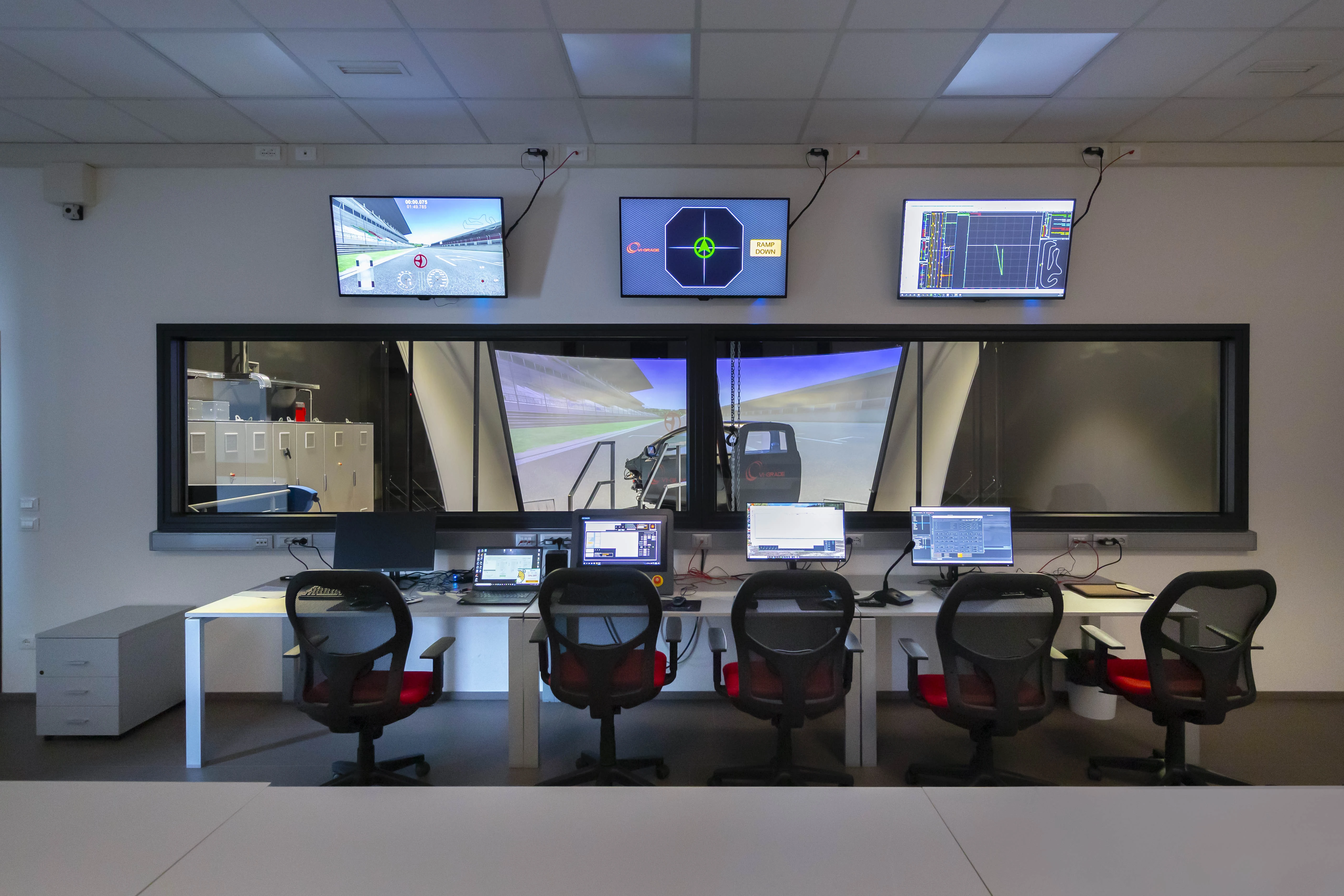
VI-grade SimCenter

The Smart Prototypes Summit 2026 will be hosted at the VI‑grade SimCenter in Udine, Italy, a leading simulation and vehicle development hub. This state‑of‑the‑art facility features professional driving simulators, real‑time simulation platforms, and hardware‑in‑the‑loop systems, enabling hands‑on testing, demonstrations, and collaborative innovation across vehicle dynamics, NVH, ADAS, HMI, and more.

Live Technology Demonstrations
High-Speed WiFi
Shuttle Service
Networking & Catering Areas

Venue Location

By Air

The nearest airport is Trieste Airport (TRS), approximately 45 minutes away. A shuttle service from selected hotels to the VI-grade SimCenter and back will be provided for all attendees.

By Train

Udine Train Station is about 15 minutes from the SimCenter. A round-trip shuttle service from partner hotels to the VI-grade SimCenter will be available throughout the event.

By Car

Easily accessible via the A23 motorway (Udine Nord exit). On-site parking is not available, but a round-trip shuttle service from selected hotels to the VI-grade SimCenter will be provided.

Recommended Accommodations

Là Di Moret
Là Di Moret
From €99/night
Hotel Friuli
Hotel Friuli
From €100/night
Best Western Hotel Continental
From €114/night
Ambassador Palace Hotel
From €119/night